May 19, 2026 | View Online | Psychiatric News

AJP: Hope for Suicide Prevention

Low-dose buprenorphine may help extend the anti-suicidal effects of ketamine, according to new research published today in The American Journal of Psychiatry. The findings were first presented yesterday at a press conference at the APA Annual Meeting.

Why It’s Relevant

“About 13 million people seriously consider suicide each year,” said study co-author Alan Schatzberg, M.D., the Kenneth T. Norris Jr. Professor of Psychiatry and Behavioral Sciences at Stanford Health Care. “All of us all probably know someone who died by suicide—whether family members, or relatives, or people we work with.” Yet treatments that specifically target suicidal ideation are limited, with clozapine as the only FDA-approved anti-suicide medication—and only for individuals with schizophrenia.

In clinical studies, ketamine has shown an ability to reduce suicidal ideation in depressed individuals within hours of administration, but the effects typically last just a few days.

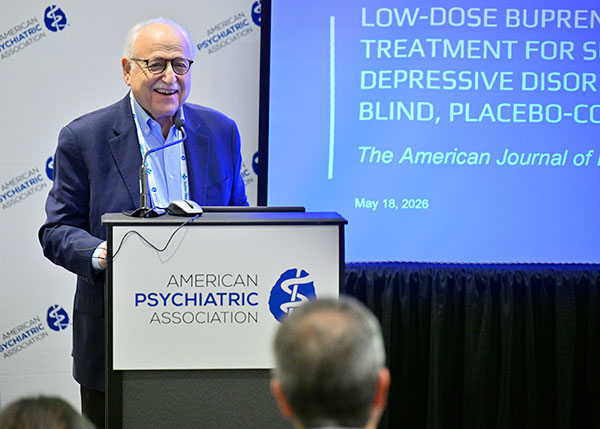
Alan Schatzberg, M.D.: “All of us all probably know someone who died by suicide—whether family members, or relatives, or people we work with.”

Advertisement

By the Numbers

  • Researchers enrolled 50 adults with a current depressive episode and clinically significant suicidal ideation (average baseline scores on the Scale for Suicide Ideation [SSI] were 15).

  • All participants received a single infusion of ketamine (0.5mg/kg). After 48 hours, they received low-dose buprenorphine (going from 0.2 to 0.8mg/day) or placebo lozenges for four weeks.

  • Following the ketamine infusion, average SSI scores among participants dropped by 9.1 points from baseline.

  • During the randomized phase, SSI scores in the buprenorphine group continued to remain low, while scores in the placebo group began to rise. At 31 days, 78% of individuals in the buprenorphine group were clinical responders (50% or greater reduction in SSI scores) compared with 48% of those in the placebo group.

What’s More

After 31 days, patients were tapered off buprenorphine and monitored for two additional weeks. There was a modest worsening of symptoms when patients came off the drug (SSI scores rose from 3.6 to 5.2 at day 45), which supported the hypothesis that buprenorphine was providing a therapeutic effect but also underscored the need to keep monitoring patients once they stopped treatment.

Advertisement

The Other Side

The study didn’t assess the effects of treatment expectancy, as individuals who started experiencing worsening symptoms after 48 hours might have assumed they were receiving placebo. All participants were taking oral antidepressants, so the benefits of ketamine plus buprenorphine on antidepressant-free patients are not known.

Takeaway Message

“This [study] will only add to the growing sense of hope that loss survivors, people with lived experience, and the overarching field of public health has about the field of suicide prevention, even in the face of such as recalcitrant cause of death,” Christine Moutier, M.D., chief medical officer for the American Foundation for Suicide Prevention, which provided funding for the study, said during yesterday’s press conference.

Source

Jason M. Tucciarone, et al. Low-dose buprenorphine following ketamine treatment for suicidal ideation in major depressive disorder: a randomized, double-blind, placebo-controlled trial. American Journal of Psychiatry. Published May 19, 2026. doi: 10.1176/appi.ajp.20250840

Related Information

Improving Suicide Prevention Through Evidence-Based Strategies: A Systematic Review

Do you want to stay on top of the latest clinical research? Sign up to receive the daily Psychiatric News Alert. ■