May 18, 2026 | View Online | Psychiatric News

10 Years of the ABCD Study

Ten years ago, the National Institute on Drug Abuse (NIDA), along with the National Institute on Alcohol Abuse and Alcoholism and eight other NIH partners, launched an ambitious national initiative known as the Adolescent Brain and Cognitive Development (ABCD) study. The goal: Enroll 10,000 kids ages 9 to 10 and comprehensively monitor their brain development for 10 years.

One decade and more than 1,700 research articles later, the data collection phase of ABCD is nearing completion. And while ABCD proved to be instrumental in changing the ways researchers think about brain neuroimaging, the findings have also reinforced the importance of psychological and social factors in healthy development.

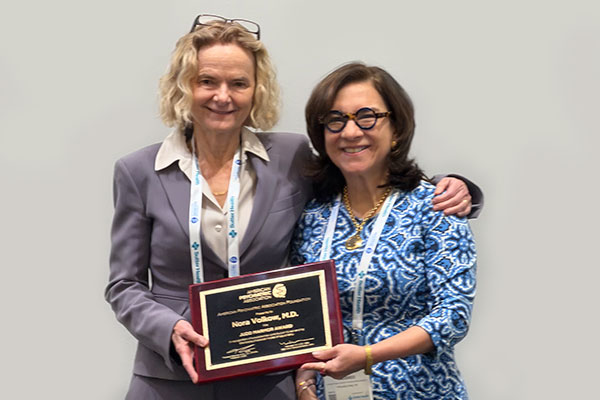
Nora Volkow, M.D. (left), with Maria Oquendo, M.D., Ph.D.

Advertisement

In recognition of that, the creative force behind ABCD, NIDA Director Nora Volkow, M.D., was recognized with the 2026 Judd Marmor Award yesterday. The Marmor Award recognizes a distinguished member of the psychiatry field who has advanced our understanding of how multiple factors—from molecules to communities—influence mental health.

To celebrate 10 years of ABCD, here are five takeaways on the past, present, and future of the project, as recounted by Volkow during yesterday’s Marmor Lecture:

The genesis: The concept was born around 2014, when Volkow was thinking about how frustrating it could be as a psychiatrist when parents brought in teenage children with behavioral issues. Unlike pediatricians, who had well-established growth curves to monitor young children, psychiatrists generally had to take a wait-and-see approach to determine if the behavior was pathological or normal teenage angst. “What if we could make our own population growth curves that visualized adolescent brain development?” Volkow said.

Why start at 10? A secondary impetus Volkow had for launching ABCD was that 2014 marked the beginning of the marijuana legalization movement. Research was already finding links between teenage marijuana use and an increased risk of schizophrenia, and Volkow was concerned about the downstream impact of legalization. While an initial concept had ABCD starting from pregnancy to capture the full scope of brain development, Volkow said, “I felt we did not have the luxury of time” for data collection.

How big is it? The final baseline enrollment included 11,880 children and their families, including about 2,000 multiple births. The children were recruited at 21 research sites across the country. As the finish line approaches, the study investigators have maintained a 95% retention rate.

Advertisement

Surprises in the data: We know exposure to lead isn’t healthy, Volkow said. But one early ABCD study found that cognitive detriments of lead exposure were almost entirely seen among children in low-income households—reinforcing the connection between biology, environment, and social status. Another study found that early initiators of marijuana (starting at ages 12 to 14) on average began experiencing prodromal psychosis symptoms before their marijuana use, suggesting it may be commonly used in youth as self-medication for distressing symptoms.

And then the pandemic: The onset of COVID-19 dramatically altered the concept of “typical” adolescent development. However, the investigators managed to adapt quickly and incorporate assessments of how the virus and pandemic stress were affecting children and families. Today, ABCD-related data have been instrumental in our understanding of long COVID.

Though data collection is almost complete, the most recent published data goes through ages 15 to 16. Volkow said it’s around age 18 when you really start to see the burden of mental illness come through, with substantial increases in diagnoses of schizophrenia, substance use disorders, and depression, as well as the onset of chronic health conditions such as obesity or hypertension—so the next batch of ABCD findings will undoubtedly prove intriguing.

Learn more at habcdstudy.org/. ■