May 18, 2026 | View Online | Psychiatric News

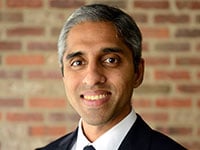
Dr. Vivek Murthy to Discuss Our ‘Deeper Spiritual Crisis’

As surgeon general of the United States from 2015 to 2017 and again from 2021 to 2025, Vivek Murthy, M.D., led initiatives on mental health, technology and health, workplace well-being, and tobacco. But it was what he saw as the country’s “epidemic” of loneliness and isolation that drew—and continues to draw—much of his attention. In 2020, he published the New York Times bestselling book “Together: The Healing Power of Human Connection in a Sometimes-Lonely World,” followed three years later by a surgeon general’s report on loneliness. Among other endeavors, he helped launch The Together Project, which fosters intergenerational programs that unite people.

At APA’s Annual Meeting, Murthy will participate in a fireside chat as part of the Menninger Lecture during the Convocation of Distinguished Fellows on Monday afternoon. In a recent interview, he offered Psychiatric News a sneak peek at what he’ll be discussing.

Advertisement

Psychiatric News: What message do you hope to convey to APA members at the Annual Meeting?

Vivek Murthy: I really do think there is a deeper spiritual crisis that we are experiencing in our country and around the world. It’s a crisis of meaning, of loneliness, and a crisis of purpose.

If we look solely at people’s well-being through the lens of physical health, I don’t think we will be able to fully address the deeper challenges to fulfillment that we are facing. We have to expand the lens to include not just physical but also mental, social, and spiritual [well-being], and we need to recognize that these four components of a human being all need tending to and nurturing.

[APA] and others who have devoted themselves to recognizing and broadening how we think about health and well-being are really important messengers right now. They are also important partners who can take action and help move the ball forward on this conversation we need to have about what drives our health and well-being and what is contributing to this crisis of pain and suffering.

PN: You have written and spoken much about loneliness. Why is this subject so important?

Murthy: Loneliness is one of the great challenges we face, not just as a health challenge but because it also has profound economic and educational implications, as well as implications for polarization and division. If we want to be healthy and well, we need to be able to foster a strong sense of social connection and community.

It’s not just a COVID phenomenon alone and not purely a social media phenomenon. Many of the forces that helped build community in the United States have been declining over the last half-century. So, this problem is a deeper and longer challenge.

From a cultural perspective, we have to help make social connections something that is a core value in society and a central part of how we shape our decisions about everything from how we live our individual lives to how we raise our kids, design workplaces and schools, and think about shaping public policy.

There is also a structural piece that we need to address. We need to build social infrastructure in our country—the tools, programs, and public policies that make it easier for people to gather and build healthy, nurturing relationships. There is a lot of work to do. This is where APA and its members can help not only to push policymakers to invest more in social infrastructure but to also call on the public to recognize how important it is to build social connections.

Advertisement

PN: How has technology contributed to the problem of loneliness?

Murthy: Technology has turbo-charged this movement toward greater loneliness and isolation—which is deeply ironic given that the initial and stated promise of technology was to connect us more deeply. What it ended up doing was substituting quality of connection for quantity. We were left with people who had thousands of contacts and followers but nobody who could show up for them at three in the morning when they had a crisis.

As we are on the precipice of another revolution with artificial intelligence, it is an opportunity to ask ourselves how we can make technology work for us and how can we be cognizant of the unintended consequences that result from unfettered and unexamined advances of technology.

PN: How do you respond to political challenges today to public health and science?

Murthy: This is a time when it is more important than ever to stand together and advocate for the welfare of our patients and our colleagues. To do that will need a combination of strong science and strong values—we have to be able to lead with both. My worry is that increasingly it feels like the science that we have used to guide us in our diagnostics and therapeutics is under threat. But there is also a moral clarity that we need around the values that guide us, not just as a profession but as a society.

I think about this not only as physician but as a parent to young children. If we really want the future to be brighter for our children, it starts with getting very clear about the values that should anchor [our] society. ■